

When you decided to get a dog, you had this beautiful vision of what your life would be like . . . and it did not include fear aggression in dogs.
You would love the dog and take him everywhere with you. He would joyfully greet people everywhere you went. They would oooo and ahhh over him, commenting on how sweet and well behaved he was.
Then reality hit. BAM.
With reactive dogs, we each have our own “reality hit” story.
Maybe you began to notice that your dog or puppy was barking sometimes when people came to visit. He would approach them but then back up and bark with his tail between his legs. He would back away if the person tried to pet him. The downward spiral of fear aggression had started.
For another dog owner, they were on their usual walk in the park, saying hello to a passing jogger, when suddenly their dog started barking like a maniac, lunging at the jogger just after she passed by. The dog hadn’t done anything like this since you adopted him 2 months ago, it seemed to happen out of the blue.
If you clicked on this link, you most likely are dealing with fear aggression. Maybe you’re just in the beginning, hoping to nip it in the bud, or maybe you are all too familiar with it and are trying to find something, anything, that might work.
Article Preview
Guilt and Embarrassment

You’re constantly going over and over the reactive scenarios you have experienced in your mind, wondering
- “What triggered my dog?”
- “What could I have done differently?”
- “My dog used to be so happy and calm, what happened???
- Did I cause him to get this way?”
The guilt and self-doubt absolutely suck.
And then there are the people you turn to for advice who assume it’s you.
Because their dog turned out just fine, so it must be something you did to make your dog reactive.
It’s natural: we all start judging when we see another dog misbehave. And until you have owned a reactive dog that you did NOTHING to cause, you assume it’s the owner’s fault.
Owning a reactive dog is so hard on so many levels.
Your dreams of taking your dog everywhere with you disappear. Walks change from a relaxing, peaceful part of your day to 30-minute outings in which you choose your route based on having the least chance of running into anyone and the most space to turn and retreat if you do.
Oh, and don’t forget avoiding routes that have “blind” corners where you approach them praying “please don’t let another dog come around the corner.”
I won’t even go into the embarrassment except to say it gets so, so old to have people stare at you with looks of disapproval on their faces.
My peak embarrassing achievement was having two, yes TWO, soccer fields of players and people staring at me and my dogs:
Soccer Field Humiliation
I was outside the fence that encircled two soccer fields, walking with plenty of space between me and the fence/games. Suddenly, a fan’s dog pulled the leash out of her owner’s hand and ran across the soccer field to say hello.
Although we were separated by a fence (thank the good Lord above), my 3 dogs saw this happy excited dog beelining at them and 2 of them began barking like idiots (1 of those barking and lunging like Cujo ready to kill his next meal).
The soccer game had to be halted by the ref while players all ran to the fence to try and catch the loose dog (causing even more psychotic reactions from my crew). As I pulled them back from the fence, lunging, choking, and barking, the soccer fans all turned and watched me like a freak show.
If you can relate to this moment, you have my condolences. Fear reactivity in dogs is tough, frustrating, and it’s a huge disappointment. Some of you will work with your dog and make huge strides. Others will work and work and see only modest improvements.
But educating yourself is worth it; you will make better choices for your dog AND you will make better choices for yourself as the owner.
What Causes Fear Aggression in Dogs?
Oy. There are so-many-things that could contribute to the development of fear aggression.
There could be one cause, but for many there are “stacks” of situational, physiological, and other factors that together are more than your pup can handle. Let’s talk about a few:
1. Medical or Physiological Issues
The first thing you want to rule out when your dog is reactive is any medical or physiological issue that may be causing the behavioral change.
- Run a blood panel and a thyroid test. I would strongly recommend doing this through Hemopet as they specialize in reviewing blood panel and thyroid levels in relation to dog aggression.
They look at more than the raw numbers to see if they are in the “normal” range. In addition, they adjust each interpretation based on the breed and age of your dog.
For example, my golden retriever’s blood test results stated all his levels were within the normal range. But Dr. Dodds flagged my dog’s T4 count, saying it was too low for a senior golden retriever. - To use Hemopet instead of your vet, make a lab appointment at your vet and pay for the blood draw. Then ship the blood draw (using Dr. Dodd’s instructions) to Hemopet and they do the test and the analysis.
- Make an appointment with your vet to rule out any physical issue (i.e. pain) that may be the underlying cause of your dog’s reactivity. If a dog is in pain and another person or dog approaches, the dog may react to protect themselves from further pain.
2. Hormone Changes
I’m not a medical guru, so I can only comment on this as an observer.
In my lifetime of dog ownership I have had two male dogs who were balanced, happy dogs, then hit puberty and transformed into fear-aggressive Cujos. I can only assume that the hormone change that occurs during puberty played a part in this behavior shift.
The other day I even heard this term: “adolescent onset fear aggression.”
Just knowing this term exists makes me realize I’m not the only one who has seen aggression appear during puberty.
Were other factors mixed in? I’m sure there were.
I later learned that one of my reactive dogs had 3 uncles euthanized for aggression (don’t even get me started on irresponsible breeding). The other was a rescue that we’re guessing was separated from his littermates and mom at 5 or 6 weeks of age.
I would love to read more about why hormone changes can change a dog’s personality, that’s a project on my to-do list.
3. Food Sensitivities
Can dog food cause aggression? There is not a lot of information out there on this subject, but I GUARANTEE you it’s a real thing. Because I’ve lived it.
That rescue dog I mentioned earlier that was taken from his litter too early (Tico), becomes more or less fear reactive depending on what I feed him. For real.
The Food That Turned My Dog into Cujo
I was working with an acupuncturist trying to reduce (or get rid of – you gotta dream right?) Tico’s fear aggression. As we reviewed his diet (raw/veggie/supplement mix) she suggested I add oatmeal, a cooling food. So I did.
In the next few days, I noticed Tico would jump up whenever my golden retriever Moose walked into the room. He would run up to Moose with a vibe that made Moose turn his head and look the other way, or turn around and leave the room.
Within another day this morphed into running at Moose barking, growling, and muzzle punching Moose’s face. Suddenly I had full-out dog attacks happening multiple times a day.
I was totally freaked out and perplexed.
NOTHING was different and suddenly Tico was attacking Moose every time Moose was near. The only thing I had changed in the few days in which the behavior had appeared was adding oatmeal, which I dismissed as a cause because the oatmeal was supposed to HELP the aggression.
24 hours later, after a fight breakup in which I melted down afterward and admitted I could not keep both dogs if this was a new reality in my house, I thought of the oatmeal again.
Although I was sure it was irrelevant, I was desperate so told my daughter we were going to eliminate it since it was literally the only thing in Tico’s life that had changed in the last 4 days.
Ready for this? The aggression immediately started to go back down. Not as fast as it increased, it probably took about 7-10 days for things to return to normal. I was totally blown away.
My dog’s aggression was made worse by . . . oatmeal???
What the heck.
We began to keep track of what we fed Tico in case we saw a behavior change.
Peanut butter Kongs? BAD. He turned into a wound-up barking idiot.
Almond butter Kongs? No problem.
Nothing has been worse than oatmeal, though. That was awful. But now we know that his issues can be exacerbated by certain foods and we’re very careful.
I have not found anything on the internet about this phenomenon. If you know of articles or studies I would love to hear about them.
Training Methods That Can Reduce or Eliminate Fear Aggression
**note: this post contains affiliate links. No one paid me to recommend these products, I recommend them because I like them. By using the link to buy the products you are helping support happynaturaldog.com!**
There are more and more good training methods out there that help dogs with fear aggression. Some will work better for one dog, some for another.
You know your dog the best, choose one that you think has good potential and try it for a few months. If you see some positive progress continue using it, if not try another.
1. Nigel Reed, Dog Trainer – “The Dog Guardian”
***MY BEST RESULTS!***
If you do one thing after reading this article, please go and read my entire story about how Nigel Reed’s training method helped my dog’s reactivity.
I have tried a lot of training methods, and this one has worked MIRACLES for my dog. The others (that I’ll include below) had some impacts but just couldn’t get me past a certain point of reactivity.
When I stumbled onto Nigel’s video “The Journey to Transform an Aggressive Dog: Diary of a Rescue Dog,” (spoiler: bring kleenex!), I knew I wanted to know more. The video shows a dog whose reactivity was a LOT like Tico’s, and over the course of 9 months the dog became happy and confident around other dogs.

There was no 1-week miracle cure like all the other reactive dog trainer sites, it involved daily work, so I knew it was the real thing.
First, I read Nigel’s book, The Dog Guardian.
His approach really clicked with me; I was making small shifts in my daily routines that helped my dogs gain confidence that I could handle all problems that we might encounter.
Note this is NOT about dominance, alpha rolls, etc.
Tico made significant improvement but I wanted more, so I signed up for Nigel’s “Dealing with Aggressive & Fearful Behaviors” online course, which included a 1 hour video consult with Nigel after course completion.
BEST. DECISION. EVER.
I’ll let you read about it in my Nigel Reed dog trainer story, but I can tell you that my friends are amazed at Tico’s progress. I can take walks on trails, and even dogs coming towards us don’t mean barking and lunging anymore!
The gist of this method is showing Tico in many, many very small and subtle ways that he does not need to worry, and he does not need to protect me. I am the “guardian” and I will take care of things.
His course is filled with a gold mine of videos showing real-life situations and how he handled them with his foster dog -I could watch them 20 times and still learn new things. The video consult at the end brings it all home and gives you a chance to ask specific questions.
Click the box below to learn more:
2. “Watch,” from Patricia McConnell’s Feisty Fido

This is a great thing for any dog to learn, but is especially helpful to owners dealing with fear aggression in dogs.
The gist is that first you teach your dog the command “watch” so they know it means they should look at you and make eye contact. Then you use it in stress-provoking situations so that your dog looks at you instead of the trigger.
I used this method successfully with a dog that had some mild reactivity (nothing like Tico’s).
Success story
I adopted Wilson, a big block-headed golden retriever, after seeing him on a high-kill shelter Facebook page. My husband and I drove 13 hours through the night (and an ice storm) to a small shelter in Michigan.
Upon seeing us, Wilson ran up to me, put his head down, and nuzzled my chest. At that moment I knew he was meant to be mine.
After 2 months of bliss, I was surprised when one day on a walk Wilson watched a man walk by, then suddenly lunged and barked at the man’s back after he had passed us. Turns out Wilson had some fear aggression issues.
I began to teach him watch, and on walks would create a safe distance between us and oncoming walkers/joggers/bikers and have him watch me (with heaps of yummy rewards) while people walked by.
Soon, when he saw someone approaching, he would begin to salivate and look at me, knowing treat jackpots were coming.
After 4 to 6 months, he could walk right by oncoming people, watching me the whole time.
By a year he was comfortable not watching me and even happy when people would greet him (because of course I had them give him loads of treats).
3. “Look at That” from Leslie McDevitt’s Control Unleashed
This game is designed to change your dog’s emotional reaction when they see a trigger from fear and/or barking to happy anticipation of a happy treat.
Each time your dog looks at the trigger, you immediately click (before any barking or lunging starts) and give your dog a high-value treat. It’s important to set your dog up for success, with enough distance that you can click and reward without the dog going over threshold and barking/lunging.
The trigger now begins to signal a reward is coming, and the dog’s emotional response around the trigger becomes more relaxed and less fearful.
If you haven’t used a clicker, read this refresher on clicker training your dog.
Success story
Sometimes success is relative. Rose came into rescue from a hoarding situation in which 50+ dogs lived inside a house and had to fight for their share of food that was occasionally thrown on the floor.
Not surprisingly, about 3 months after coming to live with us Rose began barking and lunging at new dogs she encountered.After teaching Patricia McConnell’s “watch” and Leslie McDevitt’s “look at that” game, we made slow but steady progress over the next year or two.
Does she still worry about other dogs? Yes, Rose’s progress is relative.
What is her progress? The distance from which she reacts was reduced, so we are able to simply move off the trail or turn (if space to move off isn’t available) and play look at that until we’re far enough away that she relaxes.
When she sees another dog, she looks at it, then turns to me with expectant “feed me a treat” eyes.As long as I respect that I now need to walk her to a place where she feels safe, she stays calm. My reward? No embarrassing scenes on walks in which my dog goes bananas and everyone stares at me. That’s big.
This method is a reminder that working with fear aggression in dogs includes you, the owner, setting your dog up for success.
4. BAT Training (Behavior Adjustment Training) by Grisha Stewart
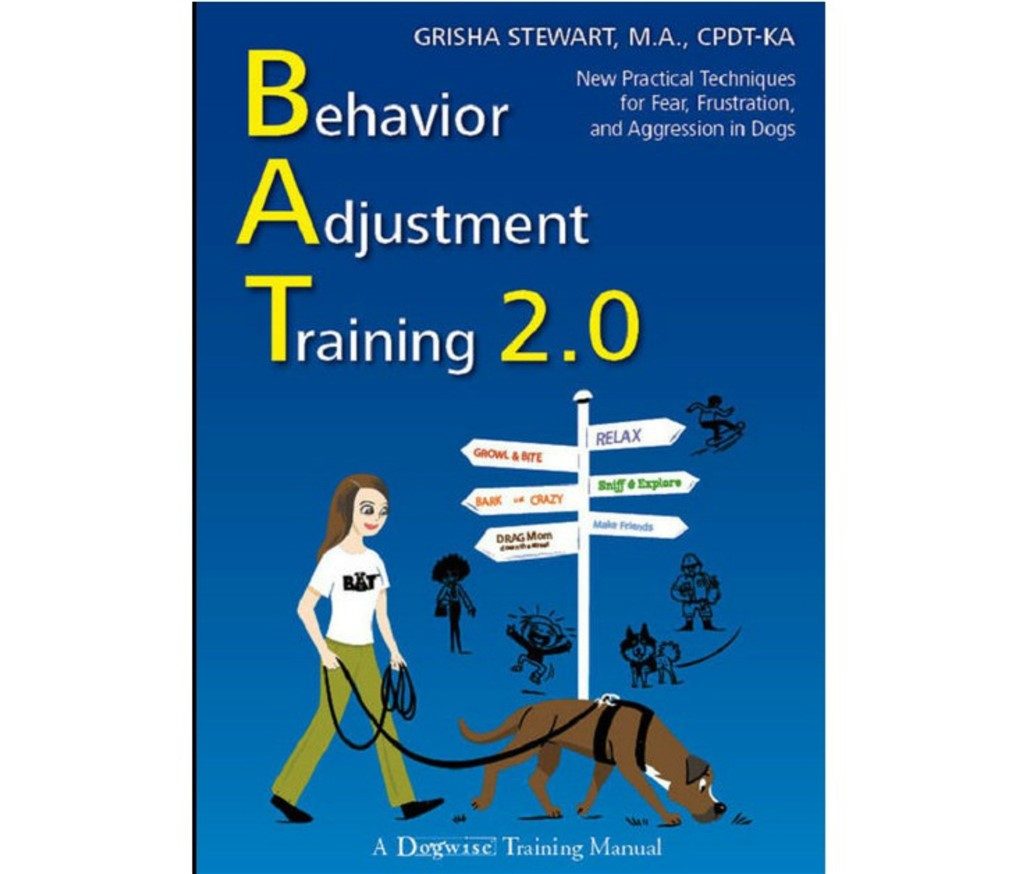
BAT training essentially teaches the dog to walk away from a potential trigger, with the distance created by going a different direction the inherent reward.
This is a natural behavior in healthy emotional dogs, so you are building that natural behavior and teaching your dog to remove himself from a situation that is stressing him out.
To do this, you use a long line on your dog and have a helper with a dog. They stand a very safe distance away and you let your dog wander.
When your dog sees the trigger (helper and dog), you watch what he does. If he moves any direction except towards the trigger you reward him, throwing treats in the “away” direction he moved. (eventually you will remove the treats and the movement away from the trigger becomes its own reward).
If he moves towards the trigger, slowly stop him. If you see stress building up, help him by calling him away and try again with more distance.
Improvement story
Tico was taken from his litter way too early, and once he hit puberty he became extremely fearful and reactive of dogs and some people. We’ll never know if the reactivity is a genetic issue or tied to early removal from the litter.
For about 2 years, we practiced BAT training, driving to public areas in which we could stand a very safe distance from a walking trail and watch people and dogs go past (but not at) us.
Tico’s success has been relative as well – and I’ve come to accept that he may never be “normal.”
Sometimes we just strive for improvement. Tico now creates FAR fewer scenes on walks.
In the past, any dog no matter how far away (we’re talking so far it looks like an ant) was cause for barking and making a huge scene.
Now, about 85% of the dogs he sees at a “safe” distance make him stop, think, then turn and go the other way, perhaps to sniff the ground or shake as a way to get rid of the stress he was feeling.
Another 5% may get a cursory bark or two and then he turns and BAT’s away.
The remaining 10% have moronic owners who beeline at us despite our obvious attempts to move away so we launch into a full barking-like-a–lunatic show.
And these people STILL don’t get the hint and slow down or change directions. Sigh. That’s a discussion for another article.
For Tico, this method wasn’t life changing as I still needed a pretty big distance, but it helped him make baby steps and set a good foundation that made Nigel Reed’s course even more effective.
Drugs
I’m not an expert on drugs so won’t spend a lot of time on this subject, but want to touch on it. Sometimes, despite trying everything you can think of, an owner is unable to reduce their dog’s fearful behavior.
I have heard numerous stories in which owners, working with their veterinarians or behaviorists, will add a medication to try and help their dog feel less fearful. For some it works, for some it doesn’t.
The stories that really pique my interest are when a medication is added and helps the training become more effective.
Many times medication alone doesn’t “cure” fear aggression in dogs but can lessen the fear that the dog feels.
If it can give the dog just a little help in feeling less fearful, the training that teaches the dog replacement behaviors/emotions when encountering triggers can be more successful.
Do Natural Dog Owners Use Prescription Drugs?
Believe me, I avoid using prescriptions as much as I possibly can. But there are times when you have to look at your dog’s quality of life and accept that you may need the help of a prescription, at least temporarily, to help them overcome their fear reactivity.
This is the point I was at with Tico, my border collie/german shepherd mix with fear reactivity and unhealthy/compulsive herding behaviors for 3.5 years.
I had tried everything: diet changes, natural calming agents like Adaptil and adaptogens, acupuncture, reactive classes, along with some of the training methods listed above.
There were baby steps of progress, like being able to take successful walks as long as I was mindful about distances to any triggers and avoiding routes where dogs or people could appear suddenly and surprise us.
But he still, for example, would go from 0 to 100 when a dog or person walked by my house and he saw them through the window.
It wasn’t fun for him – his heart was pounding like someone was running at him and screaming.
So, I decided to try sertraline, a medication used to treat anxiety, reactivity, and OCD, to see if it would help him feel more calm and less afraid in everyday life.
The results weren’t life changing, but they definitely made him able to encounter more without going over threshhold and barking, which gave our training a boost in the right direction.
Do I feel guilt? Yes. Will people judge me? I’m sure some will. But, I’m in this for my dog, and my sanity. So I’m going to strive to give him a life in which he can enjoy it and not be afraid of it all. Fingers crossed.
Fear Aggression in Dogs: Frustrating. Challenging. But don’t give up!
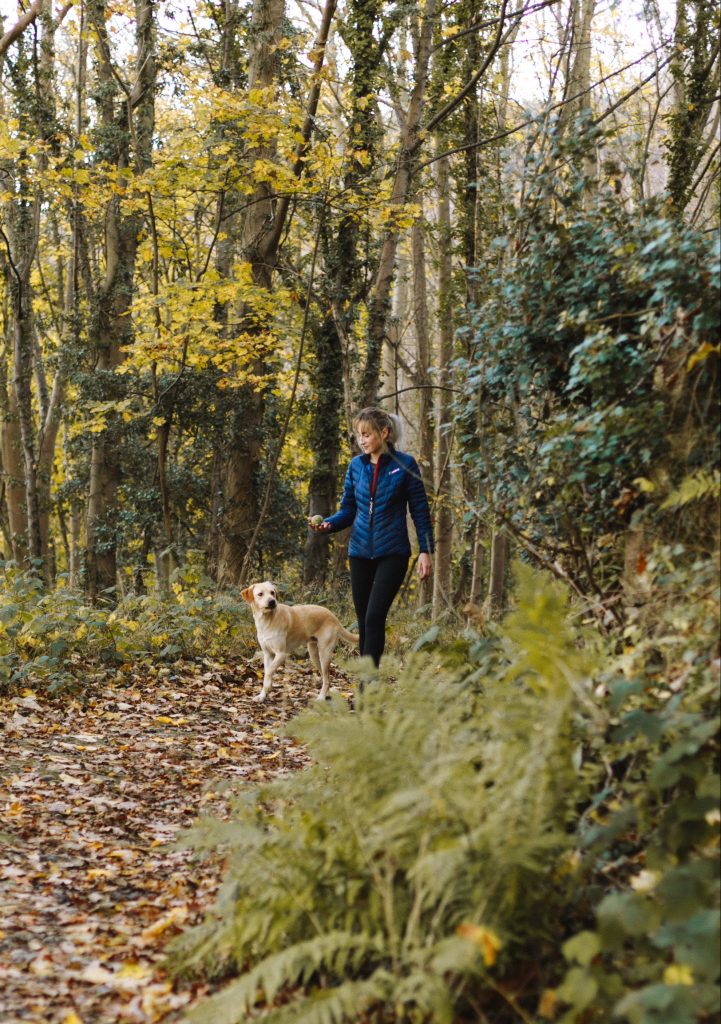
Fear aggression in dogs can be so discouraging and frustrating. You read the internet and read stories about someone trying a certain training method or a certain natural or prescription pill and BAM – their dog’s aggression goes away withing a week and they all live happily ever after.
I think that has been one of the most frustrating parts for me. Here I sit, trying everything under the sun and only getting partial results. Progress, yes, but not miracles.
So I wrote this article to talk realistically about fear aggression in dogs: What worked. What didn’t. A page to celebrate progress together, and console each other after setbacks.
Tell me your story below. Let’s help each other help our dogs be the best they can be.
Naturally,
Karen
Want to save this article for future reference? Save this Pin to your Dog Training Board!


I rescued Mooney on 8/28/21. I brought him home and he seemed happy with every thing. When he saw other dogs he was wiggly and a little too exuberant but never growled or acted fearful or aggressive. We learned in the first month he doesn’t like any negative responses to bad behavior or he will growl and snap if approached so no yelling no smacks on the butt, all we do is use firm “No’s” and direct him to lay down and ignore him till he settles down. After we learned that, one night on a walk someone set off a very large firework with the huge colors and loud bangs and he almost wrestled out of his collar then just about pulled my arms out of their sockets getting back to my condo where he would not let me take off his collar and leash till he was safely in the house and had calmed down for several minutes. Since then the children that play and laugh, the group’s of cheerleaders practicing their cheers, the football coach and his whistle and even traffic sounds make him freeze and then pull frantically trying to get away, which can be very troublesome getting him back into my condo since we are closest to the park and fields where all this occurs, and let me mention it didn’t seem to bother him when we first started our walks till the firework went off. He still greets other dogs without aggression but now he runs in wild circles and tends to be rough and can pounce on some of the smaller dogs which he also had not done previously. So now his long walks are early, early in the morning before anyone is out and late at night. I take him to run in a giant baseball field before the kids come out and no one else is around. He goes to the local pet resort a couple times a month for socialization and is classified as a “large calm” meaning he only prefers to be with other large calms at play. To take him out when there is high activity and noise is a recipe for disaster even though I have tried to continue to expose him but do not make him go into those situations that trigger the fearful reactions that make him freeze and run away. He has no medical issues that my vet can find and I hate to think of giving him medications also but there have been times when I’ve thought about taking him back to the rescue because he would probably do better in a home with a big fenced in yard which obviously I can’t give him here at our condo complex. He lives with me and my Mom and we are 60 and 78 years old. Any advice for 2 old ladies that just want to love this mostly sweet, funny and playful (most of the time) 6 year old American Foxhound mix male rescue?
Dear Robin, I’m sorry you are dealing with so many issues all at once, kudos to you for trying to figure out the best way to help Mooney. It sounds to me like the scary experience with fireworks has exacerbated a lot of issues he is having. If I were in your shoes, I would try and find a positive-based trainer who would do a consult and a few training sessions with you. They will listen to Mooney’s story, and can give you training exercises that you can do with Mooney to help desensitize Mooney to all the noises he has become fearful of. If the trainer sees that Mooney needs medication to help him, even temporarily, until he makes progress and is less fearful, they will tell you how medication might help him – while also setting up a plan so that instead of just medicating Mooney you are training him and helping him progress.
Thank you for all the hard work you are doing with Mooney! Adopting a rescue and getting through bumps in the road like this is HARD – thank you for loving Mooney and working to help him get better!
I rescued my girl 7-5-2017 she will be 5 on January 10. Judy suffers from fear aggression and all the training in the world only got better with medication. Judy came from severe abuse and neglect as well as a dog fighting atmosphere though she was never fought. The food thing is so true she suffers from major food allergies and possible malabsorption so right now she is on a puppy food because weight don’t stay on if I cut back. Judy still is reactive with some dogs and people and like you I will avoid areas I know that there are lots of dogs and people cause I never know what her reaction will be to other dogs so I take her to empty school playgrounds so she can run and be free. When people come over she hasn’t seen in a long time I have to tell them to not wear red or something in her brain changes and she may not be nice to you, not sure why that color changes her brain but it does so I just avoid the issue. I know Judy will have these issues the rest of her life due to what she experienced those first 6 or 7 months of her early life and I will just give her all the reassurance and love I can. The vet did say she has PTSD, Noise Phobia, Anxiety and a Seizure Disorder. Even with all that Judy has been through she remains very loving, dog to everyone and wants to be loved on from everyone…I loved your article.
Melissa, What a beautiful story! You are making so much more progress with Judy just because you are watching and noticing her triggers and reducing all the ones that are easy to reduce (like guests wearing red) – besides just being the right thing to do, you are giving Judy the ability/reserve to make progress on the issues you can’t change. Good luck to you as you continue to make baby steps of progress with her year after year, and thank you for sharing your story!